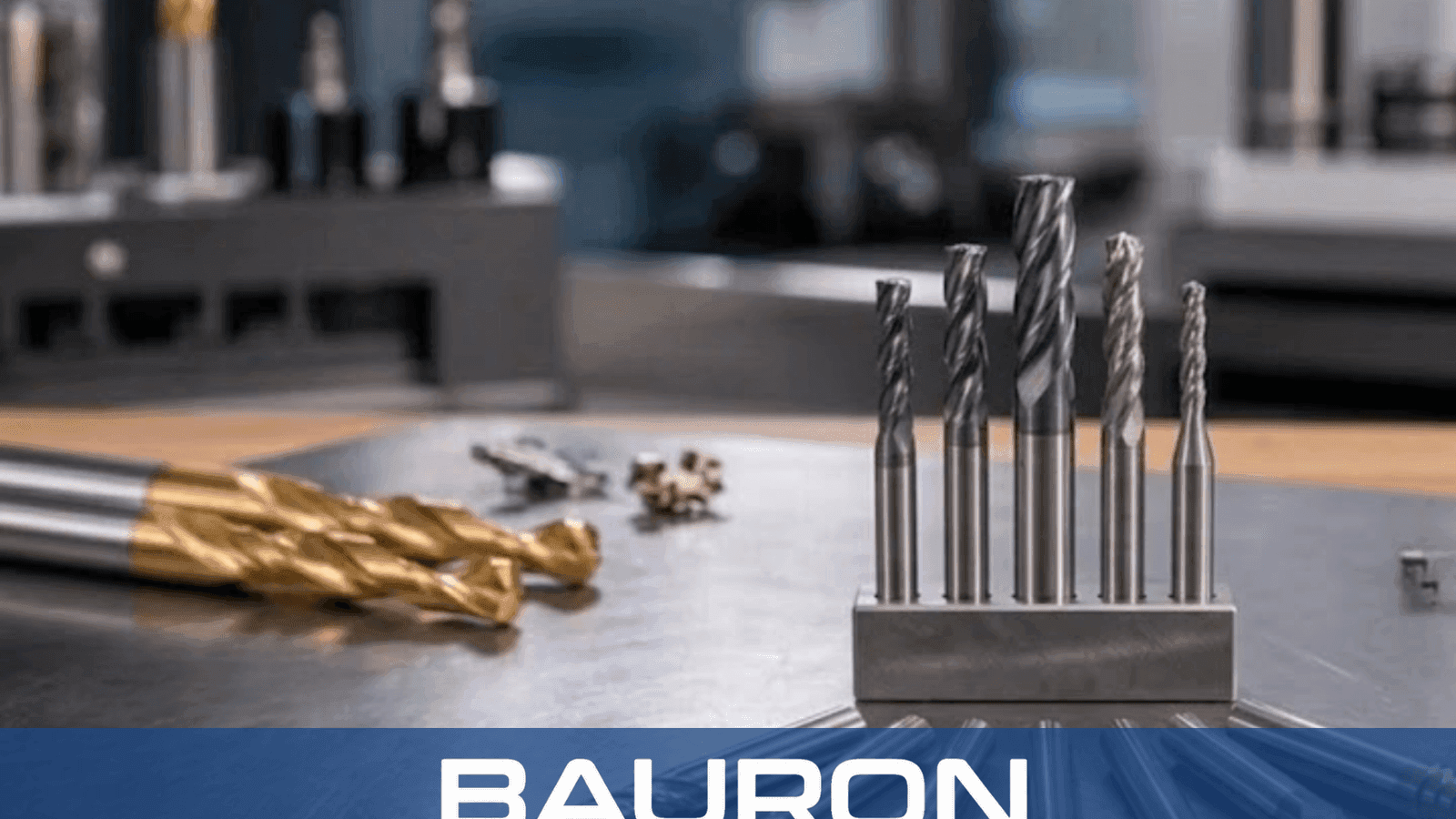
Form Radius Engagement
The concave profile fits over a workpiece shoulder and shears it into a 90° convex arc.

A single end corner rounding end mill is a dedicated form cutter that replaces sharp 90-degree outer edges with functional radii. Its concave profile is ground at one end of a solid shank, allowing deep clamping while avoiding multi-pass 3D ball-nose contouring.
The concave profile fits over a workpiece shoulder and shears it into a 90° convex arc.
The complete edge radius is generated in one continuous 2D contouring pass along the perimeter.
Ground pilot and shoulder margins blend the radius into adjacent top and side surfaces with minimal step marks.
The single-ended format leaves an uninterrupted shank for secure clamping in collet holders.
Cuts a full edge radius in one 2D contour pass and can reduce cycle time versus 3D surface sculpting.
Deep chucking engagement on the long shank can reduce overhang and vibration.
Precision-ground profiles support consistent corner radii across production parts.
High-rake flutes shear material cleanly to reduce burr formation.
Fractional and metric radius options support varied drawing requirements.
| Specification | Range / Details |
|---|---|
| Radius Sizes | 1/64 in to 3/4 in+; metric 0.5 mm to 20 mm+ available |
| Tool Format | Single-ended, with one form profile and a long shank |
| Flute Count | 2 flutes for non-ferrous materials or 4 flutes for steels and tough alloys |
| Profile Geometry | 90° concave form radius |
| Shank Style | Straight cylindrical or Weldon flat shank |
| Tolerance | Sub-micron ground form-radius accuracy |
| Material / Coating | Best For | Key Advantage |
|---|---|---|
| Solid Carbide | Hardened steels, stainless steel, titanium, and cast iron. | Core stiffness helps limit tool flex and maintain radius-profile accuracy. |
| TiAlN / AlTiN Coating | Tough alloy steels, high-temperature metals, and dry milling. | Thermal stability helps protect the concave cutting lips from heat-related wear. |
| DLC / ZrN Coating | Aluminum, copper, brass, and non-ferrous polymers. | Low friction helps reduce material welding and built-up edge. |
Solid carbide provides stiffness for hard materials, TiAlN or AlTiN supports thermally demanding cuts, and DLC or ZrN helps reduce adhesion in non-ferrous workpieces.
3-, 4-, and 5-axis centers run automated perimeter-radiusing and deburring toolpaths.
Live-tooling spindles use these cutters to radius outer shoulders on small turned parts.
They perform edge-rounding passes on aluminum sheet parts and engineering plastics.
Rounds top corners, step shoulders, and outer part perimeters in CNC production.
Replaces manual bench work with programmed CNC edge-rounding passes.
Applies radii to structural ribs and brackets to reduce sharp-corner stress concentrations.
Smooths exposed edges on medical housings, handheld electronics, and automotive interior hardware.
A double end tool has cutting radii on both ends. A single end tool has one cutting profile and a longer uninterrupted shank for deeper chucking and stable clamping.
Toolpaths are commonly programmed from the major diameter or theoretical radius center. Use the tool drawing's gauge distance from the tip pilot to the radius center to set Z depth.
They are mainly designed for external top edges, shoulders, and perimeters. Back corner rounding tools are more suitable for internal-hole exits and backside edges.
Two flutes provide larger chip valleys for aluminum, copper, and plastics. Four flutes provide more tooth density and rigidity for steels, stainless steel, and titanium.
Bauron can review non-standard radii, extended neck clearance, custom pilot diameters, and application-specific coatings from engineering drawings.
Bauron provides design and engineering support for custom geometries and coating selections. Share the workpiece material, radius, reach, tolerances, and machining conditions for technical review.
Talk to Engineering