Initial Engagement
The tool enters a pre-drilled pilot hole, which guides the first cutting section.

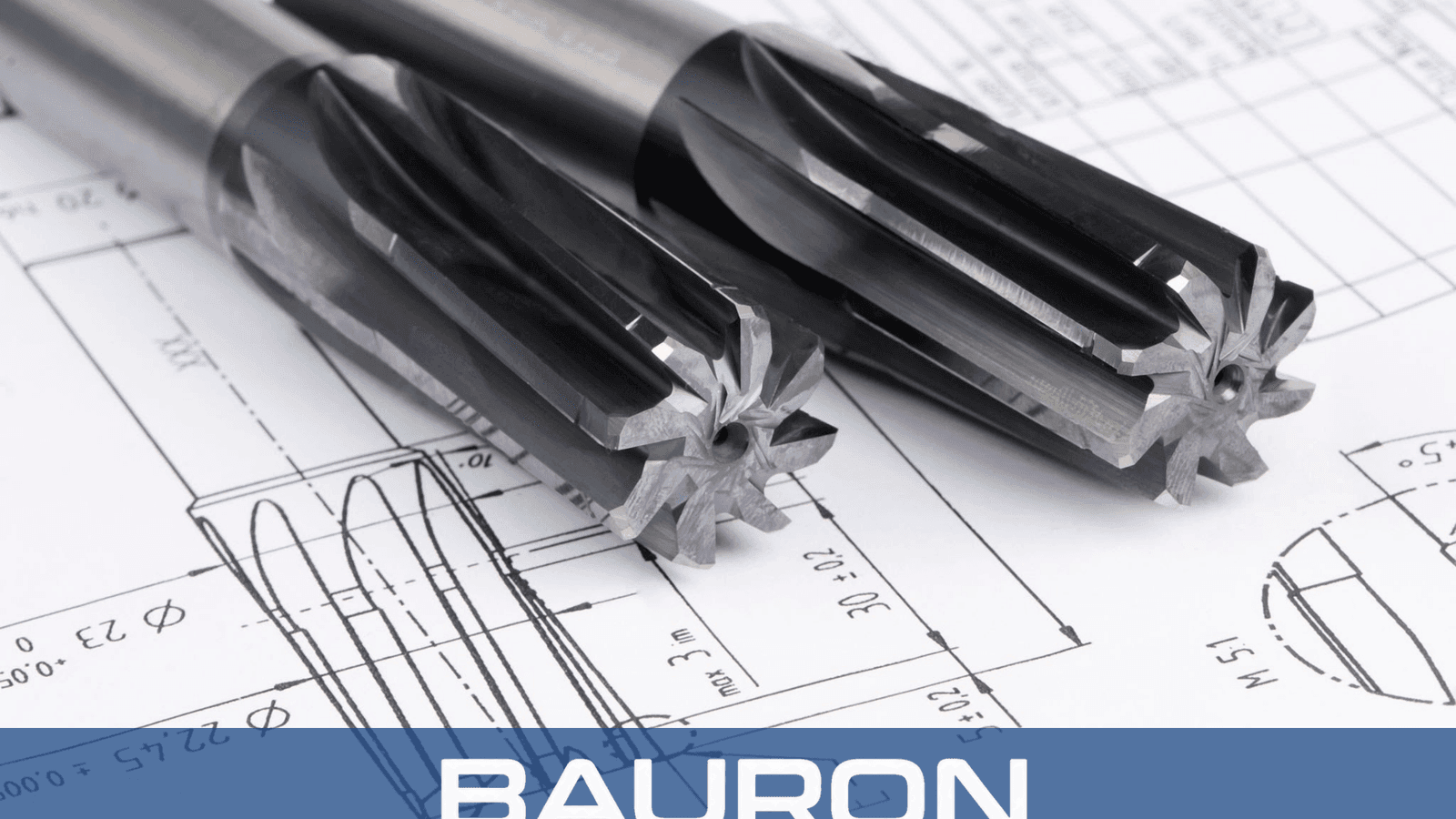
Step reamers are finishing tools designed to machine multiple concentric hole diameters in one operation. A custom stepped profile can replace several single-diameter reamers, reduce tool changes, and maintain alignment between bore levels.
The tool enters a pre-drilled pilot hole, which guides the first cutting section.
As the tool advances, multiple stepped cutting sections remove material at different diameters.
The flutes clear chips while finishing multiple bore levels and transition angles in one pass.
Machines several hole sizes in one pass to reduce tool changes and cycle time.
A single tool keeps the cutting steps on a common axis and avoids alignment differences between separate reamers.
Can match blueprint transitions including chamfers and radii.
Supports chip evacuation to help limit scoring across multiple bore levels.
Limits deflection to support dimensional control across each cutting step.
| Specification | Range / Details |
|---|---|
| Major Diameter Range | Custom built to specification |
| Number of Steps | 2 or more; customizable within tool-length and rigidity constraints |
| Step Angles | 90°, custom chamfers, or radiused profiles |
| Flute Type | Straight or spiral, right- or left-hand |
| Shank Type | Straight, Weldon, or tapered |
| Tolerance | Precision ground to OEM requirements |
| Material / Coating | Best For | Key Advantage |
|---|---|---|
| Solid Carbide | High-volume production on hard alloys. | Wear resistance and rigidity support tool life and dimensional control in stable setups. |
| Cobalt (HSS-Co) | Interrupted cuts and moderate production runs. | Toughness and thermal resistance provide an alternative for interrupted work. |
| TiAlN Coating | High-temperature, high-speed machining. | Protects cutting edges and helps reduce material buildup. |
Solid carbide suits rigid, higher-volume applications, HSS-Co adds toughness for interrupted cuts, and TiAlN can protect edges where machining heat and adhesion are concerns.
Use rigid setups for stepped-hole finishing on milled components.
Ream concentric stepped bores on stationary or rotating cylindrical workpieces.
Integrate multi-diameter finishing into automated production cycles.
Machines multi-level fluid ports where sealing and alignment are important.
Finishes countersunk or stepped bores for flush-fitting aircraft rivets.
Reams stepped bearing housings and fuel-injector ports with concentric cutting sections.
Creates stepped internal geometries for custom fittings and fluid-control systems.
A chucking reamer has one cutting diameter for straight holes. A step reamer has two or more diameters on one body for concentric, multi-level holes.
Many applications use two or three steps. Additional profiles, chamfers, and radii depend on the tool's overall length, diameter, and rigidity constraints.
Solid carbide provides rigidity and wear resistance for continuous production when the setup is stable; coating and geometry should be matched to the workpiece.
Yes. Transitional geometry can follow a drawing with sharp 90-degree steps, tapered chamfers, or blended radii.
Yes. Step reamers are finishing tools rather than primary hole-making tools, so a stepped pilot hole should be prepared before final reaming.
Bauron provides design and engineering support for custom step diameters, transition angles, flute geometry, substrates, and coatings. Share the stepped-hole drawing and production requirements for technical review.
Talk to Engineering