Pilot Drilling
A smaller bit is typically used first to establish a guide path for the larger drill.

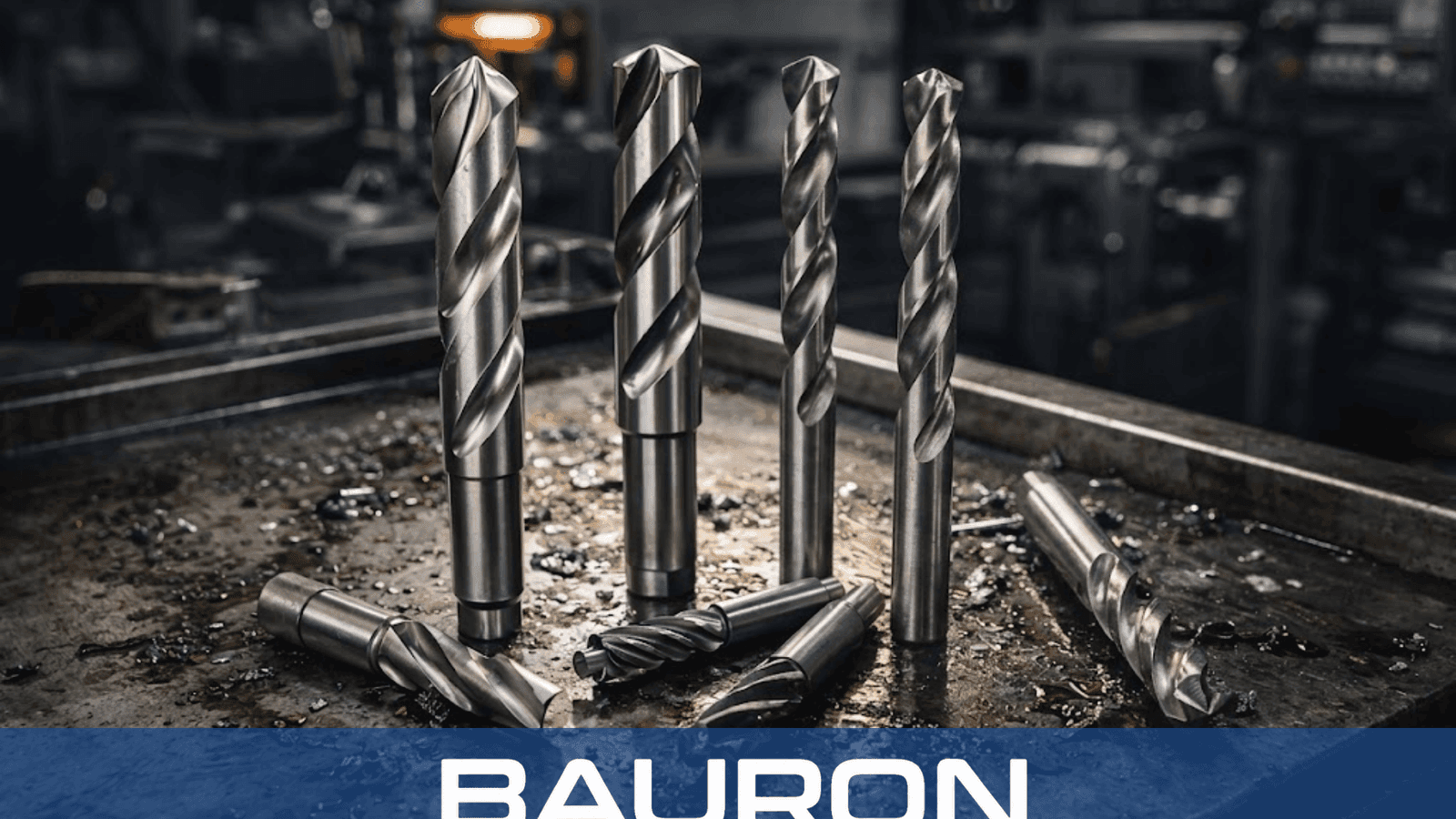
Large diameter drill bits are cutting tools designed for heavy-duty industrial applications where standard drill sizes fall short. From an oversized 1/2-inch drill bit to custom large dimensions for structural work, these robust tools remove substantial volumes of material.
A smaller bit is typically used first to establish a guide path for the larger drill.
The large cutting edges bite into the material under high torque.
Thick, rigid flutes shear away heavy chips of metal.
Wide, deep valleys carry heavy debris out of the bore path to prevent jams and overheating.
Thick web construction helps prevent the bit from snapping under high rotational forces.
Provide a secure, slip-resistant friction fit directly in heavy machine spindles.
Geometry supports removal of large volumes of metal.
Allow a larger drill body to fit into standard chucks.
Large steel bodies absorb and dissipate heat generated during deep cuts.
Thick cutting lips can be ground and restored multiple times to extend service life.
| Specification | Range / Details |
|---|---|
| Diameter Range | 1" up to 4"+ (Custom oversized dimensions available) |
| Shank Type | Morse Taper (MT2 to MT6) or Reduced Straight Shank |
| Flute Design | Standard Spiral (Right-Hand Cut) |
| Point Angle | 118° (Standard) or 135° (Split Point for harder metals) |
| Tolerance | Precision ground for heavy industrial machining |
| Operation Type | High-torque, low-RPM heavy drilling |
| Material / Coating | Best For | Key Advantage |
|---|---|---|
| HSS (High-Speed Steel) | Mild steel, aluminum, and cast iron. | Provides toughness and flexibility for heavy shock loads. |
| Cobalt (HSS-Co) | Hardened steel, stainless steel, and tough alloys. | Provides heat resistance for continuous, aggressive cutting in hard materials. |
| Black Oxide Coating | General structural steelwork. | Retains cutting lubricants and provides corrosion resistance. |
Selecting the correct material for large metal drill bits is critical. HSS provides impact resistance for heavy structural work, while cobalt HSS retains its cutting edge in high-heat environments.
Provide the downward thrust and low-RPM torque required for oversized bits.
Secure directly to I-beams for on-site, heavy-duty hole boring in construction.
Industrial machines support large diameters while minimizing deflection.
Uses large drill bits for metal to create clearance holes for large I-beam bolts.
Bores oversized utility and pipe passages through thick hull plates.
Enlarges worn pivot points and bushing housings on excavators using large metal drill bits.
Creates large flange connections and valve seating cavities.
Yes, it is recommended for holes over roughly 3/4 inch. A smaller pilot hole reduces required thrust and helps the large bit remain centered without walking.
Large diameter bits require low RPM and an appropriate feed rate. Excessive speed can overheat the outer cutting edges because surface speed is highest at the tool periphery.
A 1/2-inch drill bit with a reduced 1/2-inch shank can fit a suitable heavy-duty hand drill, but binding can transmit hazardous torque. Use an auxiliary side handle and low speed.
Standard chucks may not grip a large bit tightly enough under high torque. A Morse Taper locks directly into the machine spindle, providing a slip-resistant friction fit for power transfer.
Bauron can review requirements for non-standard diameter, length, and taper specifications and assess a custom-ground tool for the application.
Bauron provides design and engineering support for application-specific tooling requirements. Share the geometry, material, coating needs, and machining challenge for technical review.
Talk to Engineering