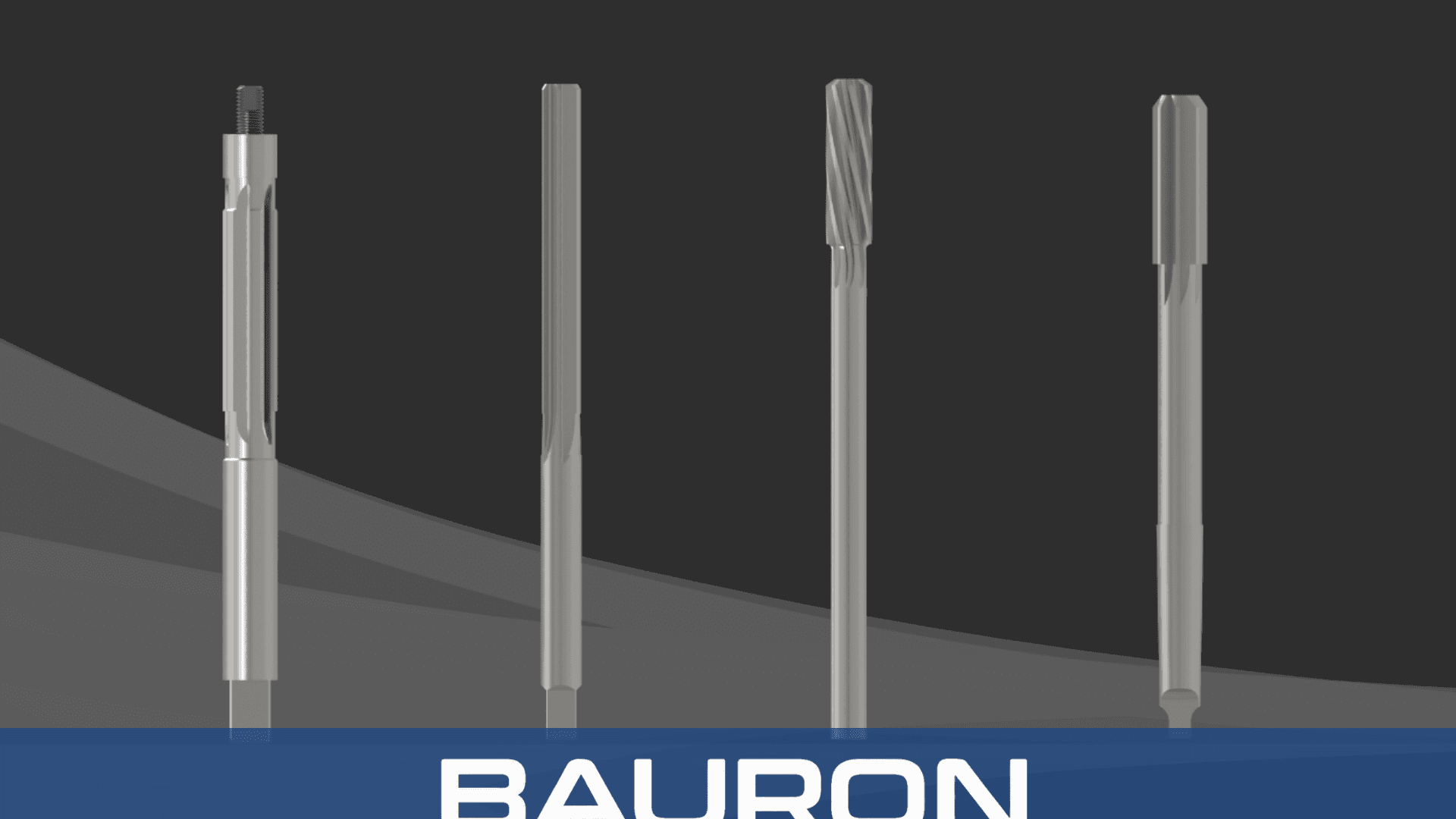
Internal Adjustment
Tightening a tapered screw or plug inside the hollow body pushes the slotted cutting section outward.

Expansion reamers are precision hole-sizing tools that compensate for cutting-edge wear or reach a closely controlled non-standard diameter. Their internal adjustment mechanism permits a small increase in cutting size.
Tightening a tapered screw or plug inside the hollow body pushes the slotted cutting section outward.
The cutting edges expand by a small amount, typically a few thousandths of an inch, toward the target size.
The adjusted edges shear a small amount of material from the hole wall as the tool rotates.
The cutting diameter is checked with a micrometer before the finishing cut.
Allows small diameter changes for wear compensation and can extend useful tool life.
Lets the cutting section flex outward while retaining the solid-body form.
Support accurate sizing after the tool is adjusted and measured.
Can reduce replacement frequency compared with a fixed reamer that cannot be resized.
Straight and spiral flute options address different chip-evacuation requirements.
Provides secure holding in compatible CNC collets, chucks, or manual drivers.
| Specification | Range / Details |
|---|---|
| Diameter Range | 1/4" to 2" in standard sizes |
| Expansion Capacity | Up to 0.006" to 0.010", depending on base size |
| Flute Type | Straight or spiral flute |
| Shank Type | Straight, Morse taper, or square end |
| Adjustment Mechanism | Internal tapered screw plug |
| Application Type | Through-holes and shallow blind holes |
| Material / Coating | Best For | Key Advantage |
|---|---|---|
| HSS (High-Speed Steel) | Mild steel, aluminum, and general resizing. | Provides toughness and the body flexibility required for expansion. |
| Carbide-Tipped | High-volume production and abrasive materials. | Adds edge wear resistance while retaining a flexible steel core. |
| Titanium Nitride (TiN) | General applications requiring added wear protection. | Adds surface lubricity and can reduce friction and heat buildup. |
HSS provides the body flexibility needed for expansion, carbide-tipped versions add cutting-edge wear resistance, and TiN can reduce friction and heat buildup.
Use rigid holders for automated sizing and diameter wear compensation.
Mount the tool in the tailstock to finish holes in cylindrical workpieces.
Provide controlled vertical finishing with a steady feed rate.
Restores the cutting diameter after edge wear from repeated use.
Produces non-standard diametrical fits that are not available from a selected fixed-size tool.
Allows the cutting size to be readjusted as wear develops when machining abrasive metals.
Can be combined with an extended-length profile for deep, difficult-to-reach cavities.
An adjustable hand reamer uses separate sliding blades to cover a relatively broad range, often up to 1/16 inch. An expansion reamer has a slotted solid body and expands only a few thousandths of an inch, primarily for wear compensation.
No. They are finishing tools designed to remove a small amount of material for final size and surface quality, not for bulk stock removal.
The stated expansion limit is generally 0.006" to 0.010", depending on the base diameter. Exceeding the tool limit can crack or permanently deform the slotted body.
Custom extended-length versions can combine added reach with an expansion mechanism for deep or difficult-to-access cavities.
Turn the internal tapered screw with the appropriate hex key or wrench so the plug pushes the slotted cutting section outward. Check the final cutting diameter with a micrometer after every adjustment.
Bauron provides design and engineering support for custom expansion ranges, extended lengths, flute geometries, shanks, cutting materials, and coatings. Share the target size and hole geometry for technical review.
Talk to Engineering