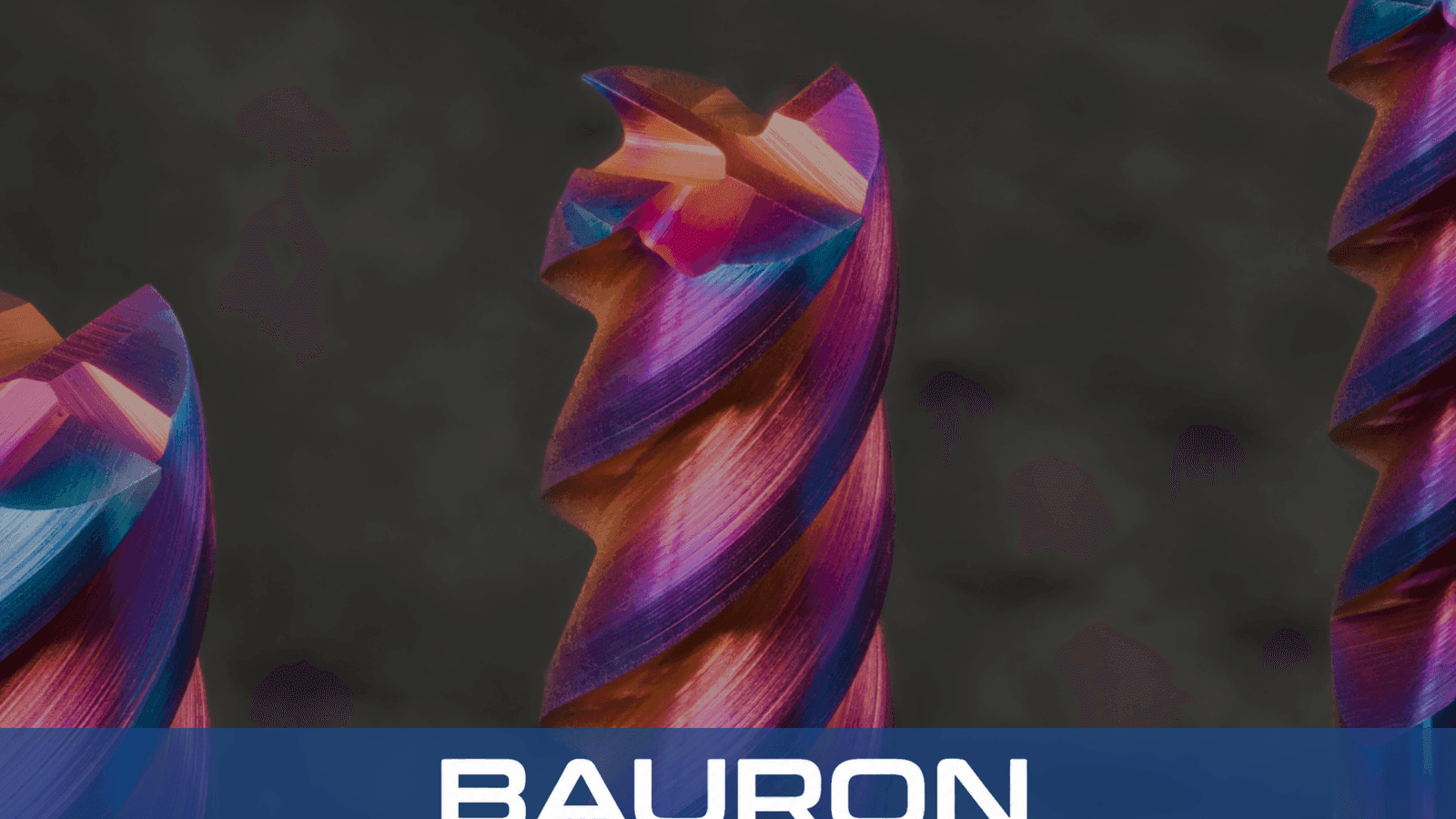
High-Speed Rotational Shearing
Precision-ground flute margins slice through metal, plastic, or composite stock at controlled surface speeds.

CNC end mills are rotary tools driven by a milling-machine spindle. Their peripheral flutes and face edges shear stock to create 2D profiles, pockets, slots, and complex 3D surfaces.
Precision-ground flute margins slice through metal, plastic, or composite stock at controlled surface speeds.
The tool can cut axially by plunging or ramping and radially by side milling or slotting.
Helical flute valleys carry chips away from deep cuts to limit chip recutting and heat buildup.
Engineered core dimensions resist lateral deflection to support dimensional accuracy.
Optimized flute geometries support productive chip loads and shorter cycle times.
Precision-ground cutting geometry supports repeatable part dimensions.
Variable-helix and variable-index flute spacing can suppress chatter during demanding milling passes.
Carbide substrates and application-specific coatings help protect cutting edges from thermal shock and abrasive wear.
Custom end mills can be specified with application-specific geometry for unique component requirements.
| Specification | Range / Details |
|---|---|
| Diameter Range | 1/32" to 1-1/2"+; metric 0.5 mm to 32 mm+ available |
| Flute Count | 2, 3, 4, 5, 6, or 7+ flutes |
| Helix Angles | 30°, 35°, 38°, 45°, or variable-helix geometries |
| End Profiles | Square end, corner radius (bull nose), ball nose, or chamfered |
| Shank Styles | Straight cylindrical, Weldon flat, or HSK/modular shank |
| Operation Types | Roughing, finishing, trochoidal slotting, ramping, and profiling |
| Material / Coating | Best For | Key Advantage |
|---|---|---|
| Micro-Grain Solid Carbide | Hardened tool steels, stainless steel, and titanium. | Provides structural stiffness and wear resistance for high-speed machining. |
| AlTiN / TiAlN Coating | Tough alloy steels, cast iron, and dry high-heat milling. | Thermal hardness helps protect the cutting edge from friction-related wear. |
| nACo / DLC Coating | Aluminum alloys, copper, and non-ferrous materials. | Low friction helps reduce material welding and built-up edge. |
Micro-grain solid carbide provides stiffness and wear resistance, AlTiN or TiAlN supports high-heat alloy machining, and nACo or DLC helps reduce friction in non-ferrous materials.
Used for automated milling, pocketing, profiling, and complex multi-axis work.
Mounted in live-tooling spindles for cross-milling, flats, and keyway slotting.
Used for sheet milling and nesting in aluminum, composite panels, and engineering plastics.
Mills cavities, internal channels, and weight-reducing pockets in structural components.
Machines injection-mold cavities, core pins, and stamping dies with complex surfaces.
Removes stock from raw forging blocks with end-mill geometries selected for steel and other alloys.
Produces final surface passes on aerospace, medical, defense, and general industrial parts.
A drill bit is primarily designed to cut axially and create cylindrical holes. End mills have cutting edges on the face and periphery, allowing axial plunging or ramping as well as radial side milling, slotting, and profiling.
Two- or three-flute end mills provide larger flute valleys for chip removal in soft, non-ferrous materials such as aluminum and copper. Four- through seven-flute tools provide more cutting edges and core material for steel, tough alloys, higher table feeds, and finishing.
Variable-helix end mills use differing flute helix angles to disrupt harmonic vibration during side milling. This can reduce chatter and support deeper axial cuts, smoother finishes, and longer tool life.
Square end mills create sharp 90-degree internal corners. A corner-radius end mill strengthens the outside cutting corners, which can support higher feed rates and improved tool life in hard metals.
Bauron can review custom end-mill requirements including flute counts, variable-index angles, neck reach, non-standard diameters, and application-specific coatings.
Bauron provides design and engineering support for custom geometries, specialized coatings, and other application-specific milling requirements.
Talk to Engineering